There’s a particular kind of frustration that comes with a household problem you thought you’d already solved. You install a water filter, enjoy the improvement for a while, and then the taste changes or the water flow starts slowing down. Maybe white deposits return around the taps, or an appliance begins showing signs of scale again. Suddenly, you’re wondering whether the equipment was the wrong choice or simply needs a little attention.
The truth is that better water depends on more than the device sitting beneath your kitchen sink. Choosing the right equipment, installing it correctly, and keeping it in good working order all play a part. Get those details right, and a treatment system can make everyday life easier. Overlook them, and even a good product may disappoint.
Start With the Water, Not the Equipment
Before looking at prices or comparing brands, take a moment to understand what’s happening with your water. Does it taste unusual? Are there visible particles, persistent stains, or mineral deposits around fixtures? Is the problem limited to drinking water, or does it affect showers, laundry, and appliances too?
These questions matter because different problems require different treatment methods. Sediment filters capture suspended particles, activated carbon can reduce certain tastes and odours, and conventional water softeners reduce hardness minerals. Reverse osmosis systems can reduce many dissolved substances, depending on their design and performance.
A water test can help establish which treatment is appropriate. This is especially important for private wells and borewells, where water composition may vary with local geology and environmental conditions. Municipal water supplies are generally treated and monitored, but household plumbing and storage can still affect the water reaching your taps.
Avoid buying a system simply because a neighbour recommends it or an advertisement promises exceptional results. Their water may have entirely different characteristics. A little investigation at the beginning can save you from paying for equipment that doesn’t address your actual concern.
Getting the Installation Right
Once you’ve identified your needs, the next decision is how to install the system. Some compact filters are designed for straightforward DIY installation, while larger systems may require plumbing modifications, drainage connections, electrical access, or professional setup.
A proper water system installation begins with checking the available space, water pressure, pipe condition, and expected household demand. These details might seem unimportant when you’re shopping online, but they can make a real difference once the equipment is in place.
For example, a family using several bathrooms simultaneously may need a different system capacity from a small household that primarily filters drinking water. An undersized unit can struggle during busy periods, while an oversized installation may add unnecessary expense.
Location matters, too. An under-sink filter needs enough room for its cartridges and future servicing. A whole-house system should be accessible without obstructing other plumbing equipment. If the unit produces wastewater, its drainage arrangements must follow the manufacturer’s requirements and local plumbing rules.
Professional installation can be particularly worthwhile when the system connects directly to the main supply or requires changes to existing pipes. A qualified installer should explain how the equipment operates, check for leaks, and demonstrate how to shut off the supply if a problem develops.
Before the installer leaves, ask for the product manual, warranty details, and a clear maintenance schedule. Knowing where the shut-off valve is located can save considerable stress later.
Why Filters Need Attention Over Time
One of the easiest mistakes is assuming that a filter will keep working indefinitely. It won’t. Filter media gradually collect particles or become less effective at reducing the substances they are designed to target. Membranes and other components also have their own service lives.
Depending on the system, overdue servicing may lead to reduced water flow, poorer taste, or declining treatment performance. A clogged sediment cartridge, for instance, can restrict pressure. A neglected carbon filter may no longer provide the expected improvement in taste or odour.
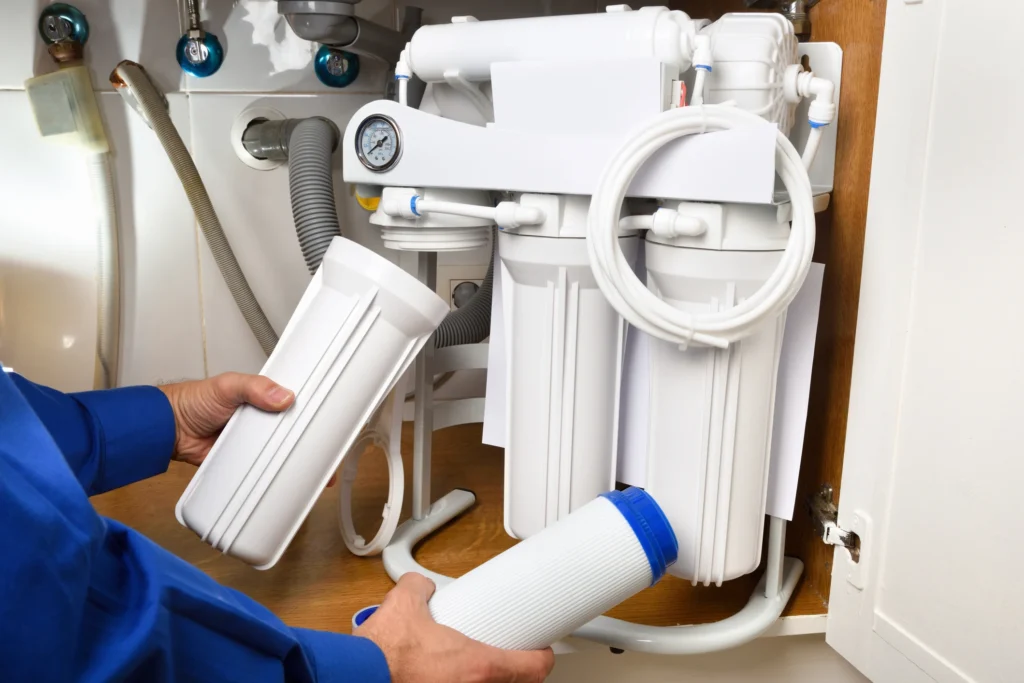
That makes filter replacements & upgrades an important part of owning a water-treatment system. Replacement intervals vary by model, water conditions, and usage, so follow the manufacturer’s guidance rather than relying on a universal timetable.
Keep a simple record of installation and replacement dates. A note on your phone or a reminder in your calendar is often enough. If several cartridges need attention at different intervals, recording each one prevents the familiar problem of forgetting which component was changed last.
Upgrades can also make sense when household needs change. Perhaps you’ve added another bathroom, increased daily water consumption, or discovered a contaminant that the existing system isn’t designed to reduce. In that situation, review the treatment requirements before purchasing a new device.
Don’t assume that adding more filtration stages will automatically improve performance. Every component should have a clear purpose, and compatibility matters. A supplier or qualified water-treatment professional can help assess whether an upgrade is necessary.
Everyday Signs That Something Needs Checking
Water systems often provide clues when maintenance is due, although no single symptom tells the whole story.
A noticeable drop in flow may indicate a clogged filter, but it can also result from low incoming pressure or a plumbing restriction. A change in taste might suggest an exhausted cartridge, yet it could also reflect a change in the incoming supply. Unusual noises, visible leaks, or recurring deposits deserve attention rather than being dismissed as normal.
If the system includes a softener, check salt levels and follow the recommended servicing procedure. If it uses reverse osmosis, monitor the prefilters and membrane according to the manufacturer’s instructions. Storage tanks and dispensing taps should also be cleaned or maintained as directed.
Most importantly, don’t assume that clear water is necessarily safe. A filter may improve taste and appearance without removing every harmful contaminant. If you suspect contamination, arrange suitable testing and follow local public-health guidance.
The Value of Reliable Maintenance and Support
Even with careful installation, questions will arise. You might need help identifying a replacement cartridge, understanding a warning light, or deciding whether an unusual change requires professional inspection.
Good maintenance & support makes these situations easier to manage. Before purchasing equipment, find out whether replacement parts are readily available, how warranty claims work, and whether the supplier offers technical assistance or servicing in your area.
This matters especially for systems that depend on regular maintenance. A device may look affordable at first, but the total cost can rise if parts are expensive or difficult to source. A reliable supplier should be able to explain operating costs, maintenance requirements, and the limits of the system’s performance.
For businesses or larger residential properties, scheduled professional servicing may be worth the investment. It can help identify developing problems before they interrupt water supply or damage connected equipment.
Keep copies of service reports and note any recurring faults. If the same issue keeps returning, the underlying cause may need attention rather than another replacement part.
A Smarter Way to Manage Your Water
A water-treatment system should make life simpler, not become another source of uncertainty. The best results come from understanding your water, selecting suitable equipment, arranging a careful installation, and following a realistic maintenance plan.
You don’t necessarily need the most expensive purifier or the most complicated setup. A well-chosen filter, installed correctly and serviced on time, can be more useful than a feature-packed system that doesn’t match your needs.
Start with reliable information, ask practical questions before buying, and keep track of routine servicing. If your water changes unexpectedly, investigate the cause instead of assuming the equipment is responsible.
Those small decisions add up. They can help protect household appliances, maintain treatment performance, and reduce unnecessary spending over time. Most of all, they give you greater confidence in the system you depend on every day.
