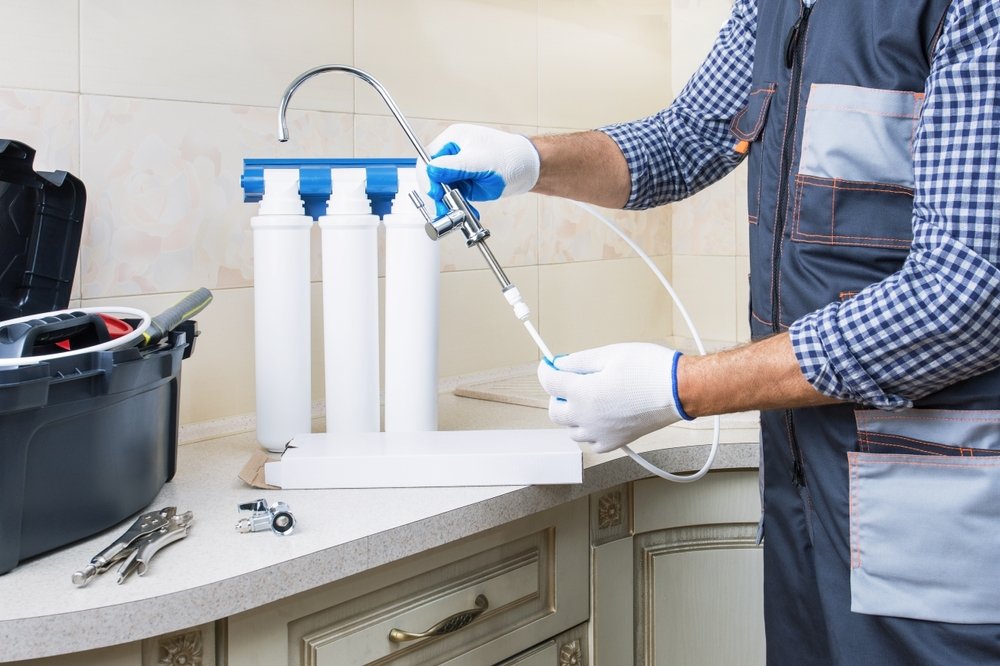
Water is one of those household essentials people rarely think about until something goes wrong. A strange taste in the kitchen tap, white mineral deposits around the faucet, dry skin after a shower, or concerns about contaminants can make an ordinary routine feel less reassuring. When that happens, choosing the right water treatment equipment becomes an important decision rather than a casual purchase.
There are plenty of manufacturers and suppliers offering filtration systems, softeners, reverse osmosis units, and purification equipment. Yet product claims can sometimes sound similar, making it difficult to understand which companies genuinely prioritize quality. Looking at manufacturing standards, product origin, engineering experience, and certification can help homeowners and businesses make a more informed choice.
Why Manufacturing Location Can Matter
The phrase made in the usa often carries meaning beyond geography. For some buyers, it represents domestic manufacturing, local employment, established production practices, and easier access to customer support or replacement components. However, the label should still be understood accurately. A product may be assembled in the United States while using some imported parts, so it’s reasonable to ask what the claim actually covers.
Manufacturing location can influence more than brand perception. Domestic production may make it easier for a company to monitor certain stages of assembly, maintain inventory, and respond to product issues. It can also support closer communication between engineering, manufacturing, and service teams.
That said, location alone doesn’t guarantee performance. A water treatment product should still be evaluated by its design, materials, testing, warranty, and suitability for the water conditions where it will be used.
Experience Matters in Water Treatment
Water treatment is a specialized field. Different water sources create different challenges, and effective solutions require more than simply placing a filter inside a housing. Manufacturers need to understand water chemistry, flow rates, pressure requirements, contaminant reduction, plumbing compatibility, and long-term maintenance.
A company described as the largest manufacturer of water treatment systems may have extensive resources, broad distribution, and a large product range. But size should be considered alongside practical evidence of expertise. A large manufacturer may offer equipment for residential properties, commercial facilities, industrial applications, and municipal projects, each requiring a different approach.
For customers, the useful question isn’t only how large the manufacturer is. It’s whether the company has experience solving problems similar to theirs. A household dealing with hard water may need a different solution from a restaurant protecting its steam equipment or a business treating process water.
Understanding the Main Types of Treatment Equipment
A reliable manufacturer should offer clear information about what each system is designed to accomplish. Water treatment equipment is not interchangeable, and choosing the wrong technology can lead to disappointing results.
Water Softeners
Water softeners reduce hardness minerals, particularly calcium and magnesium. Hard water can cause scale buildup in pipes, water heaters, dishwashers, and shower fixtures. It may also make soap less effective and leave laundry feeling stiff.
A softener is often useful in areas with significant hardness, but it does not remove every type of contaminant. It should be selected based on water testing and household needs.
Filtration Systems
Filtration systems can target sediment, chlorine, unpleasant odors, and other substances depending on the filter media. Some are designed for a single faucet, while whole-house systems treat water entering the property.
The filter’s construction and media are important. A carbon filter, sediment filter, iron filter, and specialty contaminant filter all perform different jobs. A manufacturer should explain these differences instead of presenting filtration as a one-size-fits-all solution.
Reverse Osmosis Systems
Reverse osmosis uses a semi-permeable membrane to reduce many dissolved substances. These systems are commonly installed under kitchen sinks for drinking and cooking water. Some larger configurations are used in commercial and industrial settings.
Reverse osmosis systems may require pre-filtration, storage tanks, drain connections, and regular membrane or cartridge replacement. Good product documentation should explain these requirements before installation.
Ultraviolet Purification
Ultraviolet systems use UV light to inactivate certain microorganisms. They are often used when microbial concerns are present, particularly in private well applications. However, UV treatment does not remove minerals, sediment, or chemical contaminants, so additional treatment may be necessary.
The Value of ISO Certification
Manufacturing consistency is especially important when a company produces equipment that must operate reliably for years. An iso 9001 certified manufacturer has implemented a quality management system that is assessed against the ISO 9001 standard.
ISO 9001 certification does not mean every product is automatically perfect or that the system removes every contaminant. Instead, it indicates that the organization follows documented processes for areas such as quality control, customer requirements, corrective action, and continuous improvement.
For buyers, this can provide useful reassurance. A company with a structured quality management system is more likely to have defined procedures for handling production issues, tracking problems, reviewing customer feedback, and improving internal processes.
Still, customers should distinguish between a company being certified and a specific product having independent performance certification. These are related but different forms of assurance.
Product Testing and Performance Claims
Water treatment products should be supported by credible testing information. When a manufacturer claims that a system reduces a particular contaminant, customers should look for details about the testing conditions, test methods, reduction percentages, and operating limits.
A product that reduces chlorine, for instance, may not be designed to reduce lead, nitrates, bacteria, or PFAS. The exact model and configuration matter. Flow rate, water temperature, pressure, filter age, and contaminant concentration can all affect performance.
Independent certifications from recognized organizations may offer additional confidence, especially when they apply directly to the product and the specific reduction claim. Buyers should avoid relying solely on broad statements such as “purifies everything” or “removes all impurities.” Clear technical information is much more useful than dramatic wording.
Support, Replacement Parts, and Long-Term Service
Water treatment equipment is a long-term investment. Even a well-designed system needs replacement filters, inspections, cleaning, or occasional repairs. A manufacturer’s support network can make ownership much easier.
Before purchasing, check whether replacement components are readily available and whether the manufacturer provides installation guides, troubleshooting information, warranty support, and technical assistance. It’s also worth asking how long commonly used parts are expected to remain available.
For commercial users, service response can be especially important. A filtration problem in a restaurant, hotel, medical facility, or manufacturing plant may interrupt daily operations. Reliable technical support is not a luxury in these situations; it can be part of operational planning.
Choosing Equipment Based on Real Needs
The best water treatment system is not necessarily the biggest, newest, or most expensive model. It is the one that addresses the actual water problem while fitting the property’s flow demands, budget, maintenance ability, and future needs.
Start with a water test or a reliable water quality report. Identify whether the main concern is hardness, taste, odor, sediment, microbial contamination, or a specific chemical substance. Then compare systems based on documented performance rather than attractive packaging or broad marketing promises.
A trustworthy manufacturer should be willing to explain what its equipment can do—and what it cannot do. That honesty is valuable. It helps customers avoid unnecessary purchases and creates more realistic expectations.
A More Confident Way to Buy Water Treatment Equipment
Selecting a water treatment manufacturer involves more than checking where a product is made or how impressive a company’s claims sound. Manufacturing practices, engineering experience, product testing, quality management, and after-sales support all deserve attention.
Domestic production may offer advantages, but it should be considered alongside actual product performance. Company size may indicate resources, but it should be balanced with technical expertise and customer service. Certifications can provide meaningful assurance, provided buyers understand what each certification covers.
When these details are considered together, the decision becomes much clearer. Instead of choosing based on slogans, homeowners and businesses can invest in water treatment equipment supported by evidence, responsible manufacturing, and dependable long-term service. That’s the kind of quality that continues to matter well after the installation is complete.
Leave a Reply