When people think about improving water quality at home, the kitchen is usually the first place that comes to mind. A filter attached to the faucet or a pitcher tucked inside the refrigerator seems like a reasonable solution. And for drinking water, it often is.
But what about the water used for showering, washing clothes, cleaning dishes, and running household appliances? These activities account for a considerable portion of daily water consumption, yet they’re frequently overlooked when discussing water quality.
Treating water throughout the house offers a broader approach. Instead of concentrating on a single faucet, homeowners can address specific water quality concerns across multiple areas of their property.
Why Water Quality Matters Throughout Your Home
Water comes into contact with nearly everything in a household. From the towels hanging in your bathroom to the coffee maker sitting on your kitchen counter, its quality can influence everyday routines.
Sediment, excess minerals, and unpleasant chlorine odors are among the concerns homeowners may encounter. Depending on the water source, additional contaminants could also be present.
Installing whole-home water filtration systems allows homeowners to treat incoming water at a central location before it reaches individual faucets and connected appliances.
The particular benefits depend on the filtration technology installed. Some systems focus on sediment removal, while others address chlorine, odors, or specific contaminants.
It’s worth remembering that clear-looking water doesn’t necessarily mean problem-free water. Proper testing provides a much more reliable understanding of what’s flowing through your pipes.
How Centralized Water Filtration Actually Works
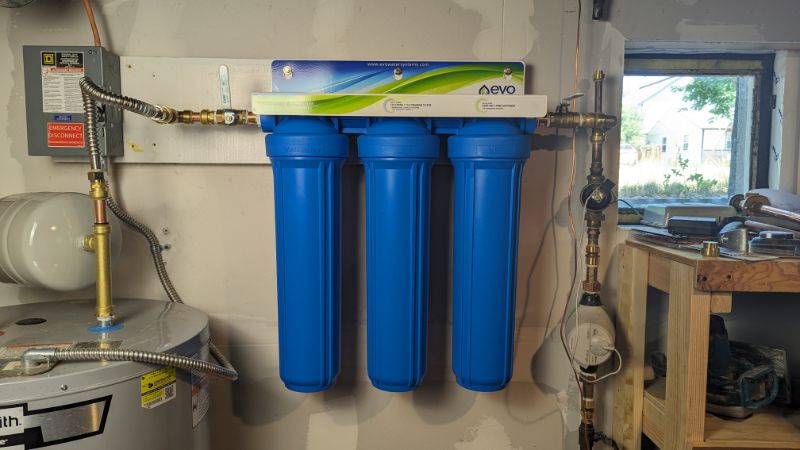
The concept behind whole-house filtration is fairly simple. Treatment equipment is generally installed near the property’s main water supply line, allowing incoming water to pass through selected filtration media before being distributed throughout the home.
A sediment filter might capture sand, dirt, and other suspended particles. Activated carbon filtration can help reduce chlorine and certain unpleasant tastes or odors.
Some installations include multiple treatment stages to address different concerns.
Unlike a small countertop filter, centralized equipment must accommodate considerably higher water volumes. That’s particularly important in busy households where showers, washing machines, and kitchen faucets may all be running simultaneously.
An appropriately sized system helps maintain adequate water flow while delivering the intended treatment benefits.
Addressing More Than One Water Quality Problem
Occasionally, homeowners discover that they’re dealing with several water quality issues at once. Their tap water might have an unpleasant chlorine smell, while bathroom fixtures regularly develop mineral stains.
These problems require different approaches. A carbon filter may improve chlorine-related concerns, but it won’t ordinarily remove the calcium and magnesium responsible for water hardness.
Customized whole-house water treatment solutions can combine filtration and softening technologies to address multiple concerns within the same property.
For example, a household experiencing excessive hardness and sediment may benefit from both a sediment filter and an appropriately sized water softener.
Rather than purchasing equipment based on persuasive advertising, start with reliable water testing. The results can help determine which combination of technologies is genuinely worthwhile.
The Convenience of Consistent Water Quality
There’s something appealing about having one centralized treatment setup rather than managing separate filters in different rooms.
Imagine washing vegetables in the kitchen, taking an evening shower, or filling a bucket to clean the floors. With a suitable system, water used in these activities can pass through the same central filtration process.
For families seeking water filtration for every tap, a professionally designed installation can offer greater convenience and more consistent treatment across connected household fixtures.
It also means fewer individual filter cartridges to remember and replace.
However, specialized drinking water treatment may still be necessary in some homes. A dedicated reverse osmosis system, for instance, can address certain dissolved contaminants that standard whole-house filters may not effectively reduce.
Helping Protect Plumbing and Household Equipment
Appliances represent a significant household investment. Unfortunately, certain water quality problems can contribute to unnecessary maintenance.
Sediment may accumulate in plumbing components, while hard water can encourage scale formation inside water heaters and other equipment.
Suitable filtration and softening can help manage these issues, potentially supporting better equipment performance over time.
The benefits aren’t always immediately obvious. You might simply notice that faucet aerators need less frequent cleaning or that your kettle requires descaling less often when hardness is appropriately addressed.
Small improvements, perhaps, but certainly welcome when you’re managing an already busy household.
What Should You Consider Before Installation?
Before investing in a centralized filtration system, take a closer look at your household’s requirements.
Water consumption, available installation space, incoming water pressure, and existing plumbing arrangements all influence equipment selection.
Maintenance costs deserve attention too. Some filters need frequent replacement, while certain treatment technologies require periodic servicing or regeneration.
Ask your installer about equipment capacity, independent certifications, warranty coverage, and ongoing expenses.
A reliable system should address your water quality concerns without introducing unnecessary complications into your daily routine.
Keeping Your Filtration System Performing Well
Like any household equipment, water filtration requires occasional maintenance. Filters eventually become exhausted, and neglected components may reduce treatment effectiveness.
Following recommended replacement schedules and arranging periodic inspections can help maintain consistent performance.
Pay attention to unexpected changes in water pressure, appearance, or odor. These could indicate that your equipment needs servicing.
Better Water Is an Everyday Investment
Whole-house filtration isn’t necessarily the most noticeable home improvement, but its benefits can reach several corners of your property.
From everyday cleaning to appliance maintenance, appropriately treated water can make household routines more manageable.
Begin with water testing, choose equipment that addresses your specific needs, and keep up with regular maintenance.
After all, water is something your family relies on every single day. Improving its quality is a practical way to invest in a more comfortable, functional home.
